

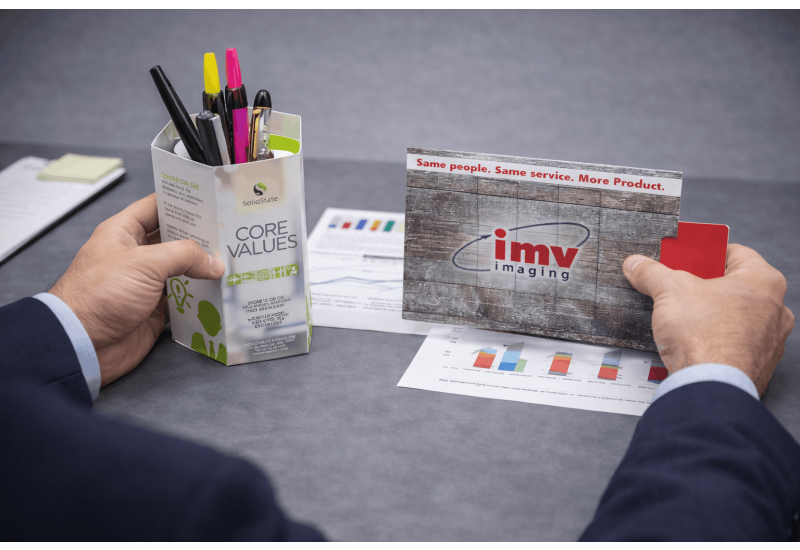
Direct mail is not just about sending something eye catching and hoping for the best. The real power comes from testing, learning, and improving with every campaign.
If you want higher response rates, stronger conversions, and better return on investment, direct mail testing ideas should be part of your strategy. Small changes in format, messaging, or targeting can lead to big improvements in performance.
In this guide, we will walk through seven proven direct mail testing strategies that help marketers refine campaigns and drive better results.
1. Test Core Elements of the Mail Piece
Before exploring advanced tactics, start by testing the core building blocks of your mail piece. These elements have the biggest impact on how recipients engage with your campaign.
Mail Format: What Mail Type Gets the Best Results?
Format plays a major role in how your message is received. Flat mail such as postcards is cost effective and easy to distribute. Dimensional mail and interactive formats stand out and often drive higher response rates.
Test different formats to see what resonates with your audience. For example, compare a standard postcard with a pop-up mailer or a video brochure. Creative formats from Red Paper Plane are designed to capture attention and increase engagement.
Design Elements to Test: Colors, Layouts, and Visual Flow
Design influences how quickly a recipient understands your message.
Test different color schemes, font styles, and layouts. Try variations that guide the reader from headline to offer to call to action. A simple adjustment in visual hierarchy can significantly improve engagement.
Direct Mail Copy: What to Say and How to Say it for Better Results
Messaging matters. The tone, length, and clarity of your copy all influence response rates.
Test different headlines, opening lines, and value propositions. Try benefit focused messaging versus feature focused messaging. Even small changes in wording can lead to measurable improvements.
Test Offers: Which Ones Actually Get People to Respond?
Your offer is often the deciding factor in whether someone takes action.
Test different types of incentives such as discounts, free consultations, exclusive content, or limited time promotions. Track which offers generates the highest response and conversion rates.
2. Use A/B and Multivariate Testing
A B testing is one of the simplest ways to improve campaign performance. Send two variations of a mail piece with one key difference and compare the results.
For example, you might test two different headlines or two different calls to action.
Multivariate testing takes this a step further by testing multiple elements at once. This approach helps identify which combination of format, design, and messaging performs best.
Start simple, then expand as you gather more data.
3. Segment Your List and Match Your Offers Accordingly
Not all recipients respond the same way. That is why mailing list segmentation is essential.
Divide your audience based on demographics, job roles, industry, purchase behavior, or engagement history. Then tailor your messaging and offers to each segment.
For example:
-
New prospects may respond best to introductory offers
-
Existing customers may respond better to loyalty rewards
-
High value accounts may benefit from personalized outreach
Testing different offers across segments helps you identify what works best for each group and improves overall campaign performance.
4. Experiment With Timing and Frequency
Timing can influence whether your mail piece gets noticed or ignored.
Test different mailing schedules such as early in the week versus later in the week, or seasonal campaigns versus ongoing outreach.
Frequency also matters. A single mail piece may create awareness, but multiple touchpoints can increase conversion rates. Testing different frequencies helps determine the optimal number of touches for your audience.
5. Optimize Your Call to Action
Your call to action is where engagement turns into results.
Test different elements of your CTA including:
-
Wording such as Book a Demo versus Get Started
-
Placement such as top of the mail piece versus bottom
-
Design elements such as color, size, and contrast
You can also test different response methods such as QR codes, personalized URLs, or phone numbers. The easier it is to take action, the higher your response rate will be.
6. Track the Right Metrics to Know What’s Working
Testing is only valuable if you measure the results.
Track key metrics such as:
-
Response rate
-
Conversion rate
-
Customer acquisition cost
-
Lifetime value
Use tools like QR codes, personalized URLs, and dedicated landing pages to monitor engagement. CRM integration can help connect responses directly to revenue.
For a deeper look at measuring performance, explore the Red Paper Plane guide on direct mail ROI to better understand how campaigns drive real business results.
7. Try Advanced Testing Strategies to Improve Results
Once you have tested the basics, you can explore more advanced strategies to push performance even further.
Consider testing:
-
Interactive formats such as video brochures that play a message when opened
-
Augmented reality experiences that bring your content to life
-
Near field communication features that connect print with mobile devices
-
Hyper personalized campaigns using consumer data and variable data printing
These advanced approaches create memorable experiences that stand out and drive higher engagement.
Red Paper Plane offers innovative formats that make it easy to test creative ideas and deliver campaigns that capture attention and convert.
Frequently Asked Questions
How can I make my direct mail more effective?
Focus on targeting the right audience, creating a strong offer, and using a format that stands out. Testing different elements and tracking performance will help you improve results over time.
What is the most important element to test in a direct mail campaign?
Offers and audience targeting often have the biggest impact. However, format, messaging, and calls to action also play important roles and should be tested regularly.
What are the best tools for tracking direct mail performance?
QR codes, personalized URLs, CRM systems, and campaign specific landing pages are some of the most effective tools for tracking engagement and conversions.
What’s the difference between A/B testing and multivariate testing in direct mail?
A B testing compares two versions of a single variable to see which performs better. Multivariate testing evaluates multiple variables at the same time to find the most effective combination.