

Most marketers treat direct mail like a one-and-done print run. If you’re investing in a/b testing direct mail creative, you’re already ahead of them. The fastest path to better performance isn't guessing what might work. It’s testing with unique direct mailers that earn attention before your message even starts. Here’s the playbook: what to test, why it works, and how to turn results into your next best-performing mail drop.
Why A/B Testing Matters More in Direct Mail Than Digital
Direct mail costs more per touch than email, which is exactly why testing is so valuable. You are not just refining a subject line. You are improving the tactile experience, the format choice, and the physical journey from mailbox to action.
The upside is significant. The ANA Response Rate Report 2023 shows that direct mail campaigns achieve average response rates of 15.6% for house files and 10.8% for prospect files, with an ROI of 160.9% for house files.
Direct mail also holds attention longer than most channels. JICMAIL reports that the average piece of direct mail is viewed for 108 seconds over the course of a month.
When your channel earns that kind of attention, creative decisions compound, and testing helps you compound on purpose.
Build a Smart Test Plan Before You Touch Layout
A/B testing works when you are disciplined about which changes to make and which to keep the same.
Before you brainstorm direct mail marketing ideas, lock down three things:
-
One goal: booked meetings, sample requests, donations, event RSVPs, or store visits.
-
One audience slice: same segment, same list quality, same timing window.
-
One measurement plan: a single primary KPI and one secondary KPI.
If you are under timeline pressure, do not overcomplicate the first test. Start with a high-leverage variable (format, offer, or CTA) and keep everything else steady.
Choose KPIs You Can Actually Trust
Direct mail often drives actions that happen across channels. Make tracking clean:
-
Primary KPI examples: QR scans to a dedicated landing page, form fills, scheduled calls, redemptions, or donations completed.
-
Secondary KPI examples: time on page, video plays, catalog requests, or inbound calls.
Use a dedicated URL or QR code for each variant. If you’re running an integrated campaign, coordinate UTMs with your digital team so the mail isn’t mislabeled as “direct traffic.”
What to Test in A/B Testing Direct Mail Creative
You don’t need a dozen tests. You need the right ones. Here are the variables that most often change outcomes in creative direct mail campaigns.
Test 1: Format and Dimensional Mechanics
This is the biggest lever, because format is the first impression.
Try a head-to-head test like:
-
Flat postcard vs pop-up format
-
Standard letter package vs interactive “pull tab” mechanic
-
Self-mailer vs a branded box that feels like an unboxing moment
If your offer is complex or high-consideration, interactive formats can help you tell the story in steps. If your message is simple, the format can act like a spotlight.
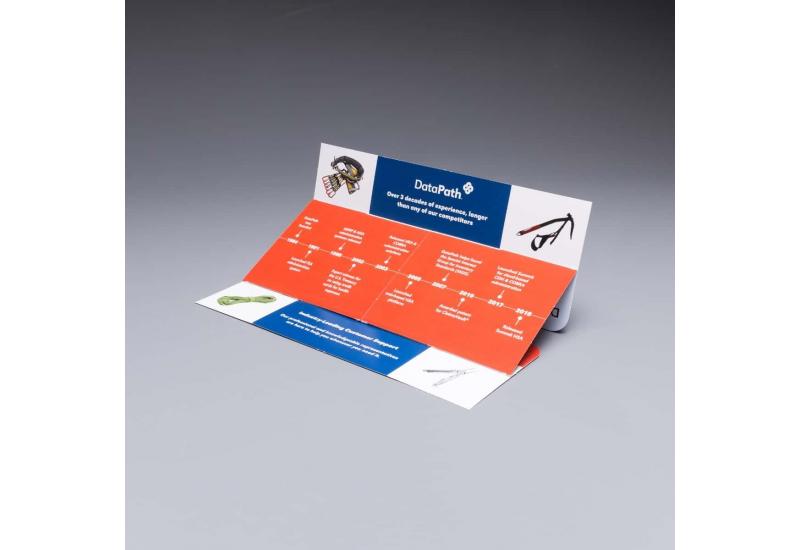
For inspiration on format, explore collections like Pop Up Mailers and Moving Message Mailers. These categories are built for creative direct mail ideas that feel premium without requiring your team to reinvent the engineering from scratch.
Test 2: The First Five Seconds (Cover, Teaser, and Curiosity)
Your outer panel is the direct mail version of a headline.
Test:
-
A curiosity teaser vs a clear benefit statement
-
A bold visual hook vs a minimal premium look
-
Personalization callout vs no personalization callout
This is where creative direct mail shines. In the mailbox, the goal isn’t to explain everything. The goal is to earn the open.
Test 3: Offer Framing and Risk Reduction
If you want measurable ROI, test the offer, not just the design.
Examples:
-
“Book a demo” vs “Get a custom audit”
-
“Free sample kit” vs “Free consultation”
-
“Limited seats” vs “Bring a colleague”
Keep the offer value the same and test how it’s framed. Marketers often discover that a lower-friction next step outperforms an aggressive ask, especially for B2B.
If you want a tactile way to deliver the offer, a branded unboxing format can do heavy lifting. See Promotional Well Boxes for packaging formats that feel like gifts, not ads.
Test 4: CTA Placement and Interaction Path
Direct mail gives you something digital rarely does: a physical “path.”
Test:
-
Single CTA vs two-step CTA (scan first, then choose path)
-
CTA on the first panel vs CTA revealed after interaction
-
QR code only vs QR code plus short vanity URL
A common win is moving the CTA earlier for busy audiences, while keeping deeper details later for people who want to explore.
Test 5: Visual Hierarchy and Copy Density
Most direct mail ideas fail because they try to say everything.
Test:
-
Short headline + 3 bullets vs paragraph-heavy explanation
-
One hero image vs multiple product shots
-
A single proof point vs several smaller proof points
This is where stakeholder pressure shows up. A/B testing gives you a neutral referee when everyone wants their message included.
Test 6: Personalization Level
You do not need full variable-data everything to test personalization.
You can test:
-
First-name personalization vs none
-
Industry-specific headline vs generic headline
-
Account-based versioning for top accounts vs one broad version
If you’re doing ABM, personalization testing is especially valuable because it turns “we think this resonates” into data.
How to Read Results From A/B Testing Direct Mail Creative
Testing is only useful if you make decisions confidently.
Use Sample Size and Timing Rules That Avoid False Winners
Direct mail responses can arrive in waves. Set a fixed evaluation window, such as 14 to 21 days after the in-home date, then compare results.
If you are testing two formats with different “engagement curves,” do not call it early. Give both versions time to perform.
Look Beyond Response Rate When the Goal is Revenue
Response rate is helpful, but it is not always the best decision-maker.
Compare:
-
Cost per meeting booked
-
Cost per qualified lead
-
Revenue per responder
-
Pipeline influenced
Sometimes a format with fewer responses produces higher-quality conversations, which matters more in high-consideration B2B.
Turn One Test Into a Repeatable System
A good rhythm looks like this:
-
Test a big lever (format or offer)
-
Lock the winner
-
Test a supporting lever (CTA placement or headline)
-
Lock the winner
-
Test a refinement lever (copy density or personalization)
Over time, your team builds a “creative baseline” that reduces creative fatigue and makes stakeholder reviews easier, because you can point to what you’ve already proven.
Where Red Paper Plane Fits Into a Testing-First Strategy
A testing mindset needs a partner who can help you iterate without adding chaos.
Red Paper Plane is built for marketers who want to find their creative home in dimensional formats, without getting stuck in engineering complexity. You can explore multiple creative direct mail ideas across formats, run controlled tests, and keep moving when timelines are tight.
If you want help selecting what to test based on your campaign goal, talk to one of our experts, and we will help you decide.
Conclusion: Make Testing the Engine Behind Better Direct Mail
The best creative direct mail examples are rarely “perfect out of the gate.” They are improved through disciplined iteration. With a/b testing direct mail creative, you reduce guesswork, defend decisions with data, and build a repeatable system for stronger results.
If you are ready to turn your next round of direct mail ideas into a measurable learning engine, explore Red Paper Plane formats, pick one variable to test, and ship with confidence. Browse format categories, then order a free sample deck to choose your best test candidates in real life.
Frequently Asked Questions
What is the Best First Test for Direct Mail?
Start with a high-leverage variable: format, offer framing, or CTA placement. If you are new to creative direct mail campaigns, format testing often delivers the clearest insights fastest.
How Many Variables Should I Test at Once?
One. If you change the format, headline, offer, and audience simultaneously, you will not know which change caused the lift. Keep your test clean so your results are defensible.
How Do I Track Direct Mail Performance Accurately?
Use a unique QR code and a dedicated landing page per variant. Track primary actions (forms, bookings, donations) and keep a consistent evaluation window after the in-home date.
Are Dimensional Formats Worth Testing Against Postcards?
Yes, especially when your offer is complex, or your audience is saturated with digital. Dimensional formats can earn more attention and create a more memorable experience.