

Holiday cards for business clients are an opportunity to pause, say thanks, and leave an impression that lasts well past New Year’s. When you combine thoughtful messaging, tactile design, and the right timing, a single card becomes a relationship builder, not just a seasonal nicety.
A physical card draws attention in an increasingly noisy calendar. Whether it’s a printed dimensional mailer, a premium foil-stamped card, or a QR-enabled greeting that links to a short video, the best holiday cards for business clients feel personal, on-brand, and useful. Below are seven practical tips, with examples and quick production notes, to help your holiday outreach be felt, remembered, and valued.
Make It Personal
Personalization is a major driver of engagement for holiday mail.
Start with a real moment: name the project, event, or outcome you shared. “Thanks for partnering on the Delta launch, your team’s clarity made it run like clockwork” beats a vague line every time. Segment lists by value: VIP clients deserve premium formats and longer handwritten notes; mid-tier accounts get tactile printed cards with a brief P.S.; broad lists can be covered with personalized e-cards.
Handwritten addressing and a one-line handwritten P.S. from the account lead can signal care and authenticity. If hand-addressing isn’t feasible at scale, focus your handwriting effort on your highest-value recipients. Small specifics create big emotional returns.

Choose a Unique Format
Format matters. If you want to be noticed, pick a design that invites interaction.
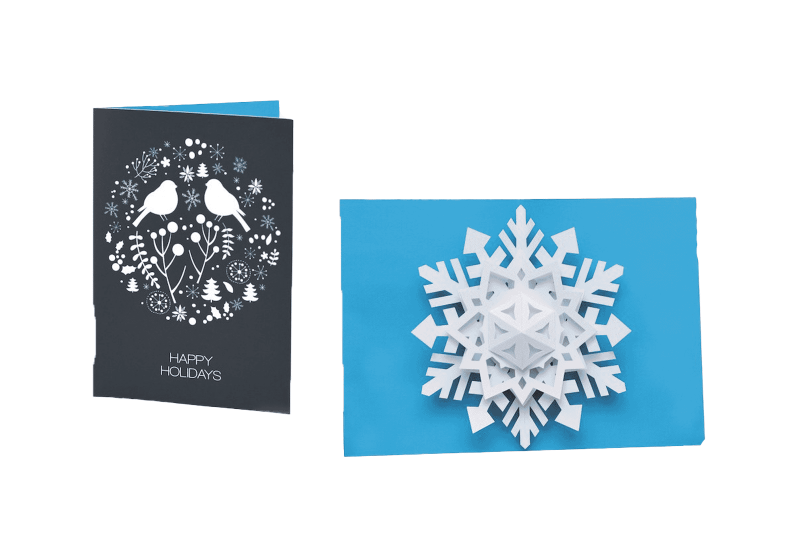
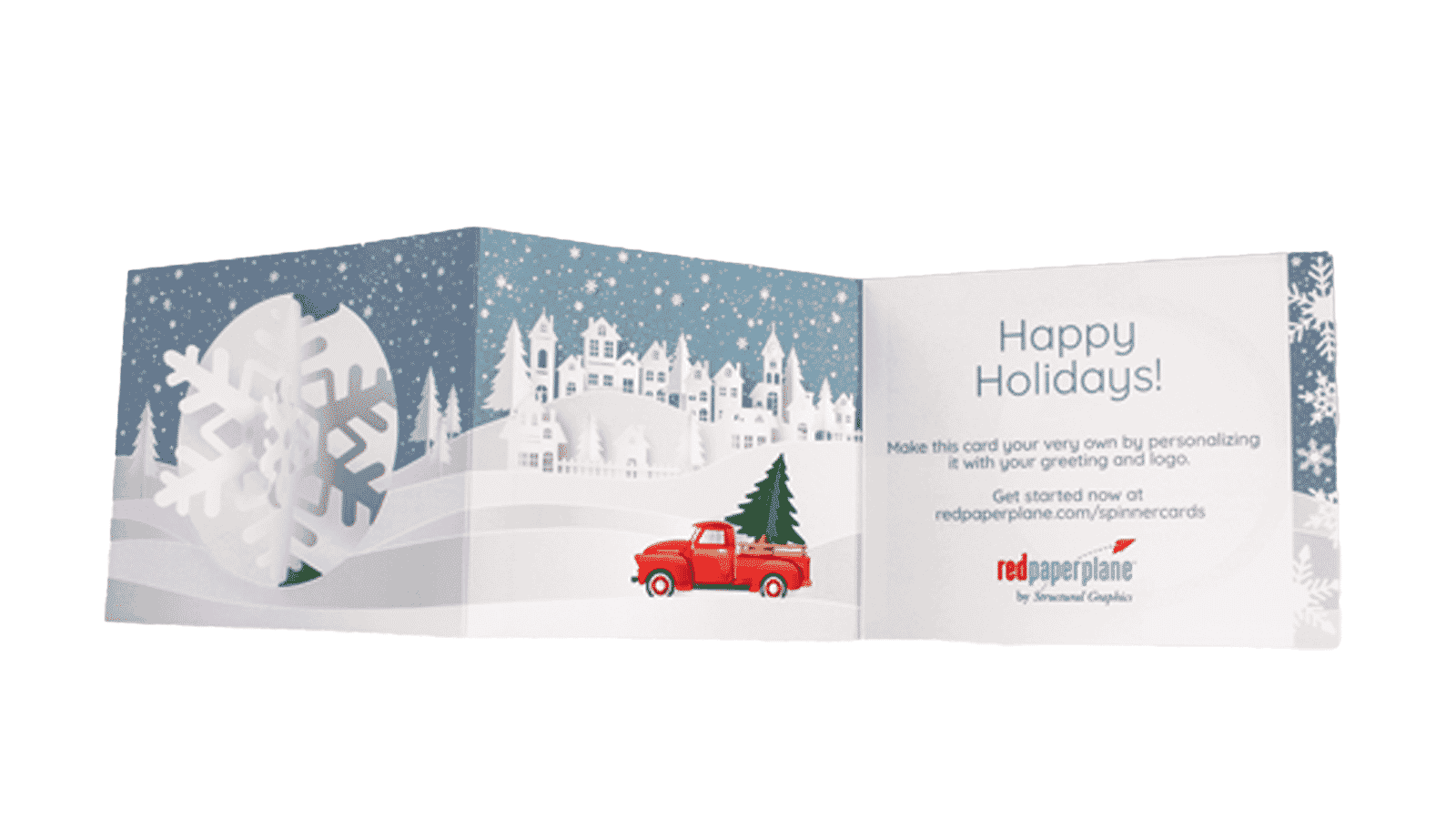
Interactive holiday cards: Our pop-up snowflake holiday card and spinner holiday cards add motion the moment they’re opened, perfect for a festive surprise. And customers love our popular holiday globe greeting cards! All of our globes ship flat, and take on their full dimensional shape just by pressing in the sides.
Video integration: Add a discreet QR code that links to a one-minute, mobile-optimized video (personal message, year-in-review, or short CEO greeting). For an in-hand video experience, see our video brochures.
If you’re unsure which formats to test, order a holiday card sample deck to compare finishes and mechanics in-hand.
Use Premium Materials & Finishes
Material choices speak before your message is read.
- Many Red Paper Plane holiday formats are produced on premium cover stocks like Mohawk Superfine Eggshell (uncoated, tactile) or coated cover with semi-gloss UV, a polished look that reproduces color crisply.
- Uncoated textures feel warm and human; coated stocks feel sleek and vibrant. Either can be “festive” without shouting.
- Keep finishes clean so your message and the interactive moment stay center stage.
Show Off Your Brand, Subtly
Branding should confirm who the card is from, not hijack the moment.
Use brand color, voice, and typography, but favor restraint. A small logo on the back, a watermark, or a branded envelope liner is often enough. Let format and copy do the heavy lifting; the card’s job is to celebrate the recipient, not sell.
Browse our fully customizable holiday greeting cards and let your imagination lead!
Keep Messaging Inclusive and Human
Holiday language needs to land for diverse audiences.
Lead with gratitude-first copy. Inclusive phrasing such as “Warmest wishes of the season” or “Wishing you a joyful holiday season and a successful New Year” is timeless. Short, specific, human copy performs best: two to four sentences for the main message and a one-line handwritten P.S.
Avoid assumptions about religious observance and localize messages for international markets when needed. Inclusive language reduces risk and increases the odds that a card will be read and kept. For further information, see our five rules for sending holiday cards to clients.
Time It Right for Maximum Impact
Timing is a strategic lever.
The primary window, late November–early December, is the sweet spot for most B2B recipients. Aim for delivery in the first half of December (roughly Dec 1–10) to avoid pre-Thanksgiving noise and last-minute postal congestion. Plan your print, addressing, and handwriting schedules backwards from your target date and allow at least 7–10 business days for domestic mail and extra time for international shipments.
If you missed the window, send a sincere New Year’s note or a belated thank-you that looks forward, not apologizes.
Add a Personal Touch
Details separate memorable cards from forgettable ones.
- Handwritten notes & real signatures: Whenever possible, use a real signature. If scale is a constraint, a one-line handwritten P.S. from a named contact still delivers a human signal.
- QR extras: Include a QR code to a one-minute personalized thank-you video or a short highlight reel, easy to scan and share.
- Internal culture: Mirror your external sincerity with employee cards; appreciating teams internally reinforces the message you share externally.
Frequently Asked Questions
What Should a Business Write in a Holiday Card?
Start with gratitude, name a specific shared win, wish a warm seasonal sentiment, and sign it. Example: “Thank you for trusting us with the Delta launch. Your team’s partnership made it a success. Wishing you a peaceful holiday season and a strong start to 2026., [Name]” Add a one-line handwritten P.S. for extra warmth.
Can We Include Branding in our Holiday Cards?
Yes, use brand color and a small logo placement. Keep CTAs low-pressure (a QR to a one-minute recap video or a sample deck).
What if We Missed the Holiday Window?
Send a thoughtful New Year’s greeting or a belated note, looking forward to the year ahead. Include a small value-add (e.g., a link to a short appreciation video or a curated resource) to make the message feel intentional and useful.
When Should Businesses Send Holiday Cards?
Aim for late November–early December (target Dec 1–10 for many B2B lists). For specific in-home timing, plan backwards from your target date and add buffer time per your carrier.