
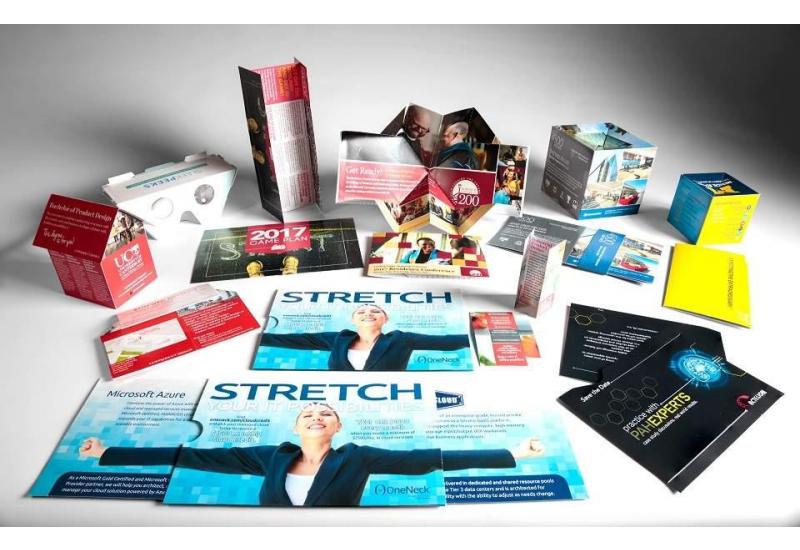
Marketing teams don’t struggle with ideas, they struggle with cut-through. You’ve got tight timelines, stakeholder pressure, and a mailbox full of “meh” competing for the same seconds of attention. That’s why the most effective brands treat direct mail creative best practices like a performance playbook: create curiosity, engineer interaction, and make the next step effortless. For immediate inspiration, explore Red Paper Plane’s creative direct mailers. You’ll find a snapshot of what “high-impact” looks like when structure and strategy work together.
The channel momentum is real. A 2024 industry report citing the DMA’s 2023 Response Rate Report notes average response rates of 2.7%–4.4% for direct mail, compared to 0.12% for email and 0.08% for social media.
What “High-Impact” Direct Mail Creative Actually Means
High-impact mail isn’t just better design. It’s a better decision design. The piece should guide recipients through a clear sequence:
Capture attention in the first three seconds, spark curiosity that earns the open, deliver the core message instantly, and make the next step obvious.
If your mailer doesn’t make the next step obvious, it becomes a beautiful artifact instead of a revenue asset. The goal of direct mail creative best practices is to build a repeatable system that turns attention into action, every time.
Start With One “Hero Action” and Make Everything Serve It
The fastest way to tank response is to ask for five things at once. Choose one primary conversion action: book a meeting, request a quote or sample, RSVP to an event, redeem an offer, watch a product video, or drive a donation. Then design the experience so that the action appears three times: on the front (seen in seconds), at the reveal moment (when curiosity peaks), and on the decision panel (the final "yes or no" moment). This is where creative direct mail pays off: structure can control pacing. Red Paper Plane builds formats that naturally lead to a decision, so you’re not forcing clarity with more copy.
Engineer a Reveal Moment That Earns the Open
The open is your first conversion. High-performing reveal patterns used in creative direct mail campaigns include transformation (simple outside to unexpected interior), countdown panels (benefits revealed in sequence), hidden messages (tuck, pull-tab, flap, or slider that "unlocks" the offer), and unboxing energy (dimensional structure that feels like a premium delivery).
If you’re mapping direct mail marketing ideas, don’t start with “postcard vs letter.” Start with: What do I want them to feel first? Discover the second? Do third?
For brand launches, VIP event invites, or high-value lead gen, a pop-up or dimensional reveal is often the most reliable way to create that “show someone else” moment.
Design for Touch Because Touch Changes How People Process Brands
Tactile isn’t decoration, it’s persuasion. Canada Post’s neuroscience research found that direct mail was 21% easier to understand and 20% more motivating than digital ads (email and display), highlighting the neurological advantage of physical engagement. Translation for marketers: paper choices, coatings, and finishes are strategic tools.
Tactile moves that consistently support premium positioning include soft-touch lamination for "this feels expensive" cues, spot UV to guide attention to a headline or CTA, embossing or debossing for brand marks and "keep-worthy" texture, and textured stocks to reinforce authenticity (think heritage, craft, or mission-driven brands).
A simple rule: pick one tactile hero and let it reinforce the message. When everything is special, nothing is.
Match the Format to the Story You Need to Tell
Smart pairings that show up repeatedly in high-performing direct mail ideas
- Complex Products with High Consideration: Use a multi-panel explainer or a video brochure when the story is better in motion. (Think demos, executive messages, patient education, donor impact stories, and onboarding.)
- ABM or Top Accounts: Dimensional experience + personalization + simple landing page.
- Launches and VIP Moments: Dimensional mail or promotional boxes that create true “unboxing” energy.
- Scale with Budget Efficiency: Streamlined formats like budget brochures that still feel intentional, not disposable.
If motion matters, video direct mail can outperform print-only formats because the message is delivered instantly at open. That’s where video mailers, video brochure mailers, and even a video box experience can shine, especially when paired with a printed CTA that routes to a meeting link in one step.
Use Personalization That Feels Human, Not Creepy
Variable data printing is powerful, but only when it reads like relevance.
Instead of only swapping a name, personalize by role and pain point ("For demand gen teams juggling pipeline targets…"), industry scenario (higher ed vs healthcare vs SaaS vs financial services), offer framing (demo vs assessment vs consultation), and proof selection (the example that matches their world). This is a core pillar of direct mail creative best practices: personalization should reduce cognitive load. The recipient should immediately feel: “This is for me.”If you’re sending creative direct mail campaigns to segmented audiences, consider creating two or three “creative shells” (same structure, different story angles) rather than a single generic version for everyone.
Make the CTA Frictionless and Trackable
Great creativity can still fail if the response is hard. A high-performing CTA is single-step (scan, text, call, RSVP), mobile-first (fast landing page, short form, autofill-friendly), and trackable (UTMs, unique QR codes, matchback, unique phone numbers). If you want an extra digital layer, USPS Informed Delivery’s “Year in Review” report (Apr 2024 to Mar 2025) shows scale and engagement metrics that can help brands add measurable impressions alongside the physical mail moment. The takeaway isn’t “mail needs digital to work.” It’s that the best direct mail marketing ideas often get even stronger when you give recipients a fast, trackable bridge from hands to screen.
Build Direct Mail into a Multi-Touch Sequence
High-impact direct mail rarely lives alone; it kicks off a journey.
A reliable performance sequence:
- Mail lands (Day 1)
- Email echo (Day 1 to 2) that mirrors the same headline and theme
- Retargeting begins (Day 2 to 10), aligned to the same offer
- Sales follow-up (Day 3 to 10) referencing the piece (“Did you get the package?”)
- Second touch (Day 14 to 21) for non-responders (often a lighter format)
When your first touch is a dimensional piece or a digital video brochure, the follow-up feels warmer because recipients have already interacted with something tangible.
Design for Shareability (The Hidden Multiplier)
A mailer that gets shown to a coworker earns free internal amplification.
Design for a quick "hold it up" moment (pop-up, reveal, unexpected structure), a photo-worthy element (bold shape, clever headline, premium finish), and a line people repeat ("It's the one with the video…").
JICMAIL’s Q1 2024 results highlight mail’s lower-funnel impact, noting purchases driven by mail up to 6% and an online-visit-to-purchase conversion rate of 38% from mail-prompted visits.
That’s the shareability advantage in action: when the piece creates a real moment, the next step doesn’t feel like “marketing.” It feels like a continuation.
Get Started with Red Paper Plane Dimensional Mailers
Most teams don’t fail because they lack creativity; they fail because production friction slows them down: dielines, timelines, postal realities, approvals, and the constant “Will this actually work?”
Red Paper Plane removes that friction while keeping the experience elevated. Our dimensional mailers help brands create memorable moments with continuous support at every step. When video is the right fit, explore options like custom video brochures, video business cards, and video mailer formats that bring your message to life the moment the piece opens. For tactile impact with an unboxing vibe, promotional well boxes are a strong starting point.
Want the fastest path to choosing the right format? Start hands-on: order a sample pack and match your campaign goal to the structure that’s built to deliver it.
Frequently Asked Questions
What are the Most Important Direct Mail Creative Best Practices?
Focus on one hero action, engineer a reveal moment, design for touch, personalize by persona (not just name), make the CTA frictionless, and track response by segment and format.
When Should I Use a Video Brochure or Video Mailer?
Use a video brochure (or video brochure mailer) when your story needs motion: product demos, executive messages, donor impact stories, onboarding kits, or high-consideration B2B outreach. Video mailers are especially effective when paired with a simple printed CTA that routes to a meeting link or landing page.
Are Promotional Boxes Worth It for B2B Marketing?
Yes, when the audience value is high, and you need to cut through. Promotional boxes are ideal for ABM, launches, influencer kits, VIP event invites, and executive outreach, where the unboxing moment becomes part of the message.
How Do I Measure Direct Mail Performance Accurately?
Use unique QR codes/URLs per segment, track conversions on dedicated landing pages, run matchback against mailed lists, and report results by format and audience. If you add an Informed Delivery layer, you can also monitor additional digital engagement metrics.