

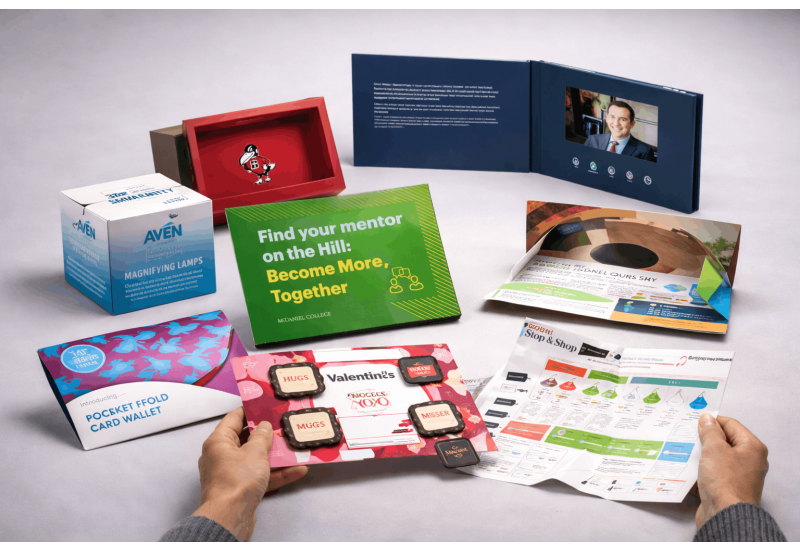
B2B buyers are surrounded by email sequences, retargeting ads, sponsored content, and sales outreach. That makes attention harder to earn and even harder to keep. Direct mail for B2B gives marketers another way in: a tangible, considered format that can break through the sameness of digital touchpoints. When it’s built as creative direct mail rather than a generic printed piece, it can support lead generation, account-based marketing, event follow-up, and high-value sales conversations.
What is Direct Mail for B2B?
Direct mail for B2B is physical marketing sent from one business to decision-makers at another business. Unlike broad consumer campaigns, B2B direct mail usually targets a smaller audience with a higher-value outcome in mind. The goal isn’t just to reach. It is relevance, memorability, and movement.
That can include:
-
Prospecting into named accounts
-
Supporting account-based marketing programs
-
Following up after events or meetings
-
Re-engaging stalled opportunities
-
Opening conversations with high-value prospects
The formats can vary depending on the campaign goal. In B2B, strong performers are often the formats that feel more deliberate and harder to ignore: dimensional direct mail, interactive print, pop-up mailers, video brochures, and personalized kits.
How Direct Mail for B2B Works
B2B direct mail works best when it’s treated as part of a campaign, not as a standalone printed item.
Start With the Right Audience
The first step is deciding exactly who should receive the mailer. That might be a named list of accounts, a group of target companies in a specific sector, or contacts grouped by role, sales stage, or buying intent. In B2B, tight targeting matters because the audience is smaller and the value of each opportunity is higher.
Match the Format to the Goal
A standard postcard can work in some cases, but B2B campaigns often benefit from formats that create stronger recall. A dimensional package can help with high-stakes outreach. An interactive format can support a product launch or demo push. A personalized mailer can strengthen ABM outreach or post-meeting follow-up.
Execution matters here. The strongest campaigns usually bring together concept, format, personalization, print quality, and fulfillment. That’s where direct mail design, personalization, and mailing support can make the campaign easier to manage and more consistent from idea to delivery.
Connect the Piece to a Clear Next Step
Every mailer should make the next action obvious. That might be booking a demo, scanning a QR code, visiting a landing page, replying to a rep, or registering for an event. Physical mail gets attention, but performance still depends on what happens next.
Why Direct Mail Still Works in B2B
Direct mail still has a place in B2B because it solves a real attention problem. Digital channels are fast and scalable, but they’re also crowded. Physical mail creates a different kind of interaction: it’s seen, handled, and often kept long enough to influence later action. That makes it especially useful in longer buying cycles and multi-touch campaigns. USPS and industry guidance also continue to position direct mail as a channel that works well alongside digital outreach rather than in opposition to it.
It’s also a better fit for some B2B realities than marketers assume. Buying decisions are often made by committees, not individuals. A mailer on a desk or in a shared office can circulate, prompt discussion, and reinforce a message over time. That’s one reason direct mail frequently shows up in ABM and high-value prospecting strategies.
For inspiration, it helps to look at creative direct mail examples that show how format, message, and audience fit together.
When to Use Direct Mail for B2B
Direct mail for B2B isn’t something to send just because inboxes are busy. It works best in specific situations where attention, timing, and message quality matter.
For Account-Based Marketing
ABM is one of the clearest use cases. When the target list is small, specific, and commercially important, a tactile mailer can help create a stronger first impression than another email touch. This is especially true when the message is tailored to the account, role, or stage of the opportunity.
For New Customer Acquisition
Direct mail can also help when the goal is opening doors with qualified prospects. Instead of relying only on digital outreach, marketers can use physical mail to add weight to the campaign and give the sales team a more memorable conversation starter. That’s why it aligns well with new customer acquisition campaigns built to stand out in competitive categories.
For Product Launches or Event Promotion
When a launch needs more than a generic announcement, direct mail can create a stronger sense of occasion. The same applies to event invitations, executive briefings, and post-event follow-up, where the format itself helps signal importance.
For Re-Engagement and Sales Follow-Up
Mail is also effective after a key meeting, trade show, or stalled deal. A thoughtful follow-up piece can bring the conversation back into view without feeling like another automated reminder.
What B2B Teams Need to Plan Before Sending
Strong creativity is only part of the job. Good B2B direct mail also depends on practical planning.
Mailing Logistics and Budget
Teams need to think through production timing, quantities, postage, fulfillment, and delivery windows before the campaign goes live. Reducing operational uncertainty early makes it easier to launch on time and avoid surprises. For a practical overview, see mailing services and postage costs.
Clean Data and List Readiness
A good idea can still fail if the mailing list is incomplete or inconsistent. Names, titles, company details, and address fields all need to be clean and usable, especially if the campaign includes personalization. This guide to formatting your mailing list is a useful starting point for campaign prep.
Sales and Marketing Alignment
Someone has to own the follow-up. If a direct mail campaign is meant to generate meetings or revive opportunities, sales and marketing need to agree on timing, messaging, and response handling before the first piece goes out.
Direct Mail for B2B Examples
The best B2B direct mail campaigns aren’t all built the same way. The format should reflect the audience, the offer, and the sales context.
A Tech Brand Reaching Enterprise Buyers
A technology company launching a complex solution may use a dimensional or interactive mailer to introduce the offer, communicate value quickly, and drive demo requests. In this case, the format helps slow the recipient down long enough to engage.
A Business Services Firm Targeting Decision-Makers
For consultancies, financial services firms, and other professional services brands, a premium mail piece can signal credibility and care. It can also differentiate the brand from generic digital outreach. That’s where marketing solutions for business services become a strong next-step path for readers in that space.
An Agency Using Direct Mail to Stand Out
Agencies can use creative B2B direct mail campaigns for self-promotion, event follow-up, or outreach to ideal-fit accounts. A well-executed format gives the recipient an immediate sense of the agency’s thinking and attention to detail.
What Makes A B2B Direct Mail Campaign More Effective?
The most effective campaigns usually share the same fundamentals:
-
a tightly defined audience
-
one clear message
-
a format that supports the objective
-
personalization, where it adds meaning
-
a simple response path
-
coordinated follow-up after delivery
Direct mail for B2B works best when it’s targeted, well-timed, and tied to a real business objective. It’s not just a print tactic. It’s a way to create stronger first impressions, support complex buying journeys, and give important accounts something more engaging than another digital message.
Explore the direct mail formats, structural ideas, and campaign support options that help make B2B outreach feel more considered, memorable, and effective.
Frequently Asked Questions
Is Direct Mail Effective for B2B Marketing?
Yes, especially when the audience is targeted, and the campaign supports a clear commercial goal. It is often a strong fit for ABM, lead generation, re-engagement, and event follow-up because it gives marketers a more tangible way to earn attention.
What Types of B2B Companies Use Direct Mail?
Technology brands, agencies, consultancies, business services firms, healthcare companies, manufacturers, and other B2B organizations can all use direct mail. The best format depends on the audience, offer, and sales cycle.
What is the Best Format for a B2B Direct Mail Campaign?
There is no single best format. Dimensional direct mail works well when attention is the main challenge. Interactive print and pop-up formats are useful when the campaign needs more explanation or a stronger brand experience. Simpler formats can still work when the message and targeting are strong.
How Do You Measure B2B Direct Mail Performance?
Common measures include response rate, meetings booked, demo requests, landing page visits, sales acceptance, pipeline influence, and opportunity creation. The right metric should match the campaign goal.
When Should B2B Marketers Choose Direct Mail Over Email?
It is usually not a question of replacing email completely. Direct mail is most useful when email alone is not getting traction, when the target account is high-value, or when the campaign needs a more memorable, tactile touchpoint.