
When brands invest in creative direct mail, they expect more than delivery. They want stronger engagement, better recall, and a campaign that actually feels worth opening. That expectation is justified. Lob’s 2025 consumer research found that 84% of consumers read direct mail immediately or the same day it arrives, and 47% say a unique shape or design influenced them to take action.
So why do so many campaigns still miss?
Usually, it is not because direct mail stopped working. It is because the strategy behind the mailpiece was too generic, too broad, too unclear, or too disconnected from execution. Below are nine costly direct mail mistakes brands keep making, along with practical fixes that help creatives perform better.
1. Treating Direct Mail like a Flat Print Ad
One of the most common creative direct mail mistakes is treating mail as just another static ad. A nice-looking panel with a headline and logo may check the box, but it rarely creates the kind of pause, interaction, or memory that physical media can deliver.
Fix: Design for Engagement, Not Just Appearance
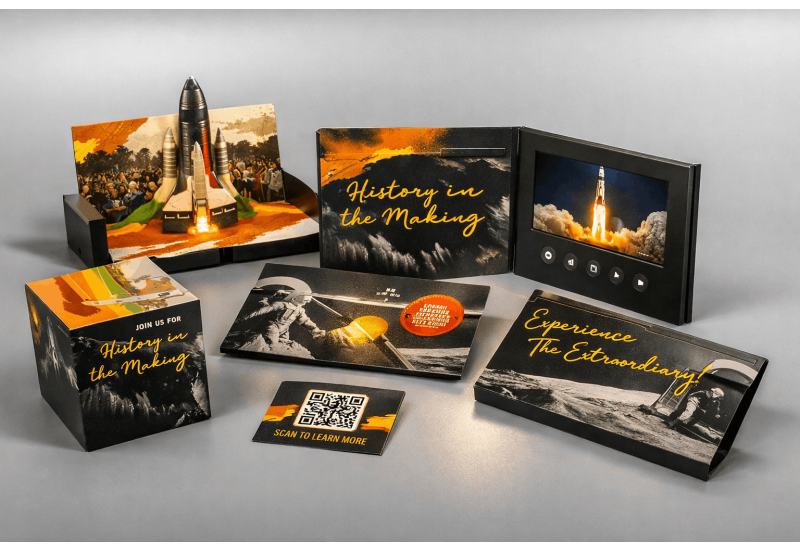
The strongest creative direct mail campaigns give the recipient something to do. Open a structure. Pull a mechanism. Spin a reveal. Watch a message. That’s why interactive formats like pop-up mailers stand out so well in crowded campaigns. Red Paper Plane’s own creative mailer content highlights how formats such as pop-ups, moving message mailers, desktoppers, and video pieces create stronger interaction than standard postcards.
2. Choosing a Format That Doesn’t Match the Offer
Some brands overspend on a premium format for a routine message. Others send a flat, low-impact piece for an offer that actually needs more theater and persuasion. Both are expensive direct mail mistakes.
Fix: Match the Format to the Value of the Message
Use simpler formats for reminders and repeat-touch campaigns. Use more immersive formats for high-stakes outreach, launches, executive targeting, and premium brand storytelling. For example, video brochures make sense when the message needs explanation, emotion, or a high-end presentation. Red Paper Plane also supports campaign-specific use cases, such as new customer acquisition, which offers a better planning lens than choosing a format based on novelty alone.
3. Leading With Cleverness Instead of Clarity
Creativity is valuable. Confusion is costly.
Some of the most impressive-looking creative mailers fail because the recipient cannot quickly tell what is being offered, why it matters, or what action to take next.
Fix: Make the Value Obvious Fast
A mailer should answer three questions almost immediately: What is this? Why should I care? What do I do next?
That’s where many good direct mail examples outperform flashy ones. The format may be surprising, but the offer and CTA stay clear. If you’re looking for inspiration, Red Paper Plane’s guide to creative direct mail examples is a useful benchmark for balancing novelty with usefulness.
4. Sending to the Wrong Audience
Irrelevance is a direct mail mistake that destroys response. Lob reports that irrelevance is the number one reason mail fails, while 67% of consumers say they take action when mail includes a personalized detail. USPS Delivers also reports that 88% of marketers say personalized direct mail significantly improves response rates.
Fix: Segment and Personalize Earlier
Better targeting almost always beats bigger volume. Segment by account value, lifecycle stage, geography, industry, or behavior. Then personalize the offer, the message, or the landing page.
Operationally, that also means having cleaner data before production starts. Red Paper Plane’s Help Center explains how to format your mail list so campaigns are easier to personalize and prepare correctly from the beginning.
5. Forgetting the Digital Bridge
A beautiful mailpiece without an easy response path is a missed opportunity.
Fix: Build for Omnichannel Response
QR codes, PURLs, dedicated landing pages, and digital follow-up all make direct mail easier to track and easier to act on. Lob’s 2025 research found that 76% of consumers who engage with direct mail use a digital channel to respond.
That’s one reason the best creative mail ideas aren’t only tactile. They’re connected.
6. Measuring Unit Cost Instead of Campaign Return
Another major direct mail mistake is judging a campaign only by print and postage costs. Cheap mail that gets ignored isn’t efficient. It’s just less expensive to fail.
Fix: Measure Response, Meetings, Pipeline, and Recall
High-impact formats often make sense when the audience is smaller, and the upside is bigger. That’s especially true for ABM, donor development, higher education, healthcare, agency outreach, and premium consumer offers.
7. Asking for Too Much in the CTA
Some campaigns ask the recipient to do everything at once: visit a site, watch a video, fill out a form, call a rep, and follow on social. That creates friction.
Fix: Give One Clear Next Step
The CTA should feel easy and immediate. Scan to learn more. Book the meeting. Request a sample. RSVP now. Strong, creative direct mail ideas don’t pile on actions. They focus attention.
8. Underestimating Production and Mailing Realities
A concept can look brilliant in a mockup and still break down during proofing, assembly, list handling, or postage planning.
Fix: Bring Execution Expertise in Early
This is where Red Paper Plane’s support becomes a real advantage. The services page emphasizes project review, design support, variable-data printing, mailing services, and project management, all of which reduce risk before a campaign goes out.
On the logistics side, Red Paper Plane’s Help Center explains mailing services and postage costs, including the additional 2–7 business days often required for mailing.
That kind of planning reflects one of Red Paper Plane's strongest promises: continuous support through the details that often derail ambitious campaigns.
9. Playing It Too Safe
One of the most common direct mail mistakes is playing it too safe. Brands know they need to stand out, but still choose mail that feels familiar enough to approve and easy enough to forget.
Fix: Build for Memorability
Direct mail remains powerful because it’s physical, easier to process, and more memorable than digital alone. Canada Post’s neuromarketing findings reported a 70% higher brand recall and a 20% higher motivation score for direct mail than for digital media.
That’s the real opportunity behind better creative direct mail ideas. Not louder marketing. More memorable marketing.
Conclusion
The most expensive direct mail mistakes are rarely dramatic. More often, they’re small strategic misses that quietly weaken response: the wrong format, weak relevance, unclear messaging, poor follow-through, and avoidable production friction.
The brands that win treat direct mail as an experience. They align the format with the goal, personalize intelligently, connect mail to digital, and build with execution in mind from the start.
Frequently Asked Questions
Can Creative Direct Mail be Customized for Brand and Audience Segments?
Creative direct mail can be tailored to your brand standards, campaign message, and audience segments. With variable data printing, dimensional mailers can support more relevant outreach across lists, versions, and campaign goals.
Will Creative Direct Mail Move Efficiently Through Standard Postal Channels?
Yes, dimensional mailers are designed to balance visual impact with practical mailing. Red Paper Plane supports mailing services and USPS verification, helping marketers use direct mail formats that stand out without creating unnecessary delivery friction.
What is the Typical Turnaround Time for Creative Direct Mail?
Turnaround depends on the format, quantity, and finishing requirements. Some video brochures can ship in as few as seven days, while other interactive print formats may take longer. Building in time for creative approval, production, and mailing helps campaigns stay on track.
Is Creative Direct Mail Practical for Large and Targeted Campaigns?
Creative direct mail works for both small, high-value sends and larger campaign volumes. That makes it a practical option for marketers who need to balance personalization, scale, and campaign performance across different audience segments.