
Personalization in direct mail should do more than add a first name. The real goal is to make every piece feel timely, useful, and worth opening. In a crowded outreach environment, personalized direct mail gives brands a better way to stand out with promotional boxes that feel intentional from the first touch. When audience insight, packaging, format, and offer all work together, mail becomes more relevant and more likely to drive action.
Red Paper Plane’s creative direct mail collection and services make it simpler to build tactile, tailored campaigns that are straightforward to execute. Here are seven practical ways to make mail more relevant.
Why Personalized Direct Mail Still Stands Out
Generic outreach is easy to ignore. Personalized direct mail feels different because it shows a clearer understanding of who the recipient is, what they care about, and why the message matters now. That relevance becomes even more powerful when the format creates a physical experience people want to explore.
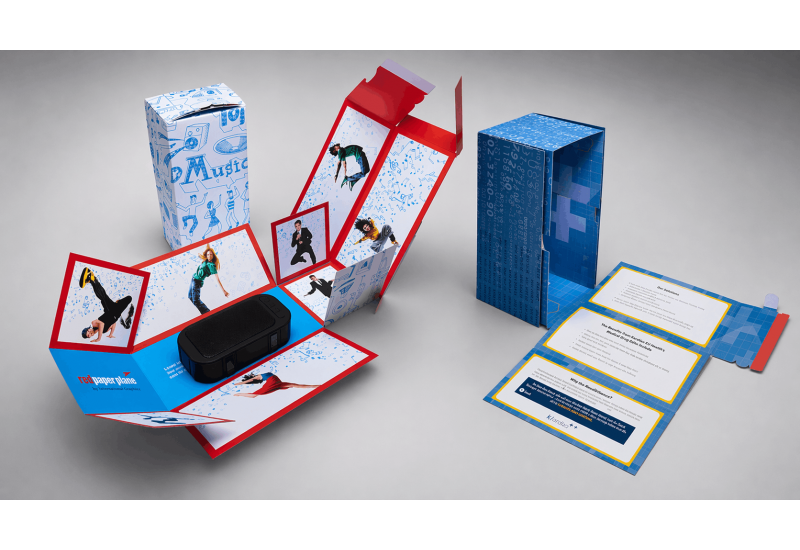
A well-chosen structure can shape perception before a word is read. A dimensional piece, such as a promotional well box, pop-up mailer, or moving message mailer, makes a campaign feel more purposeful and more engaging.
1. Segment Your Audience Before You Personalize the Mailer
Strong personalization starts before design. It starts with audience segmentation.
Different groups have different priorities, and they should not receive the same message with a few minor edits. A prospect evaluating vendors needs a different conversation than a current customer considering expansion. A campaign aimed at higher education marketers needs different proof points than one aimed at healthcare, technology, or agency teams.
When you segment by industry, buyer role, customer stage, account type, or campaign objective, the creative becomes sharper. That makes personalized direct mail more effective and helps the packaging feel tailored rather than mass-produced. It also reduces waste because each version has a more precise purpose. For teams that need executional support, Red Paper Plane’s services page highlights project management, mailing prep, and personalization support to keep segmented campaigns organized.
2. Go Beyond First Names With Contextual Personalization
A first name can make a piece feel more direct, but it rarely makes it truly relevant. Better personalization reflects the recipient’s real context.
That can mean changing imagery based on industry, adjusting copy to reflect a known challenge, tailoring the offer to a stage in the buyer journey, or using examples that feel immediately familiar to the audience. A mailer sent to enterprise decision-makers should not read like one built for first-time buyers. A campaign for alumni giving should not look like a recruitment piece.
This is where data becomes useful rather than decorative. Red Paper Plane’s services enable more personalized, relevant messaging when custom creative needs to scale across segments. Good personalization feels natural. It helps the recipient understand the message faster and trust that the brand is paying attention.
3. Use a Promotional Box or Marketing Box to Increase Perceived Relevance
Format influences how seriously a message is taken. A strong promotional box or marketing box makes a campaign feel more substantial before the contents are even revealed.
That is one reason dimensional direct mail remains so effective for launches, executive outreach, event invitations, and account-based campaigns. A well-built structure creates curiosity, adds perceived value, and encourages interaction. It signals that this is not routine communication.
The key is to make the box support the story. A promotional box should not exist just to look impressive. It should frame the reveal, organize the content, and make the message easier to absorb. For smaller kits, a small well box mailer delivers a compact, high-value presentation. For premium outreach, a large well box mailer provides more room for layered storytelling, inserts, or product samples.
4. Match the Format to the Message and Campaign Goal
Not every campaign needs the same kind of mailer. The best format depends on what you need the audience to understand, feel, and do next.
Awareness campaigns benefit from a format that quickly surprises and drives recall. Product education needs more space, more sequencing, or more interaction. Event promotion calls for a dimensional invitation that feels important in hand. Follow-up campaigns work better with a simpler structure that keeps the next step clear.
That is why format selection matters. Custom promotional boxes, moving message mailers, and pop-up mailers each solve different communication problems. Even a single product, such as the Extendo mailer or 3-inch Pop-Up Cube Self Mailer, can change how a message unfolds in the recipient’s hands.
5. Personalize the Offer, Not Just the Design
Even the most impressive mailer can fall flat if the offer does not fit the audience. Relevance comes from value, not appearance alone.
A prospect responds to a consultation, demo, or sample. A current customer cares more about a launch kit, upgrade conversation, or expansion opportunity. A donor audience needs inspiration and proof of impact, while a recruitment audience needs a more vivid picture of what the experience feels like.
The CTA should feel like a logical next step for that audience. A marketing box that points everyone to the same action feels disconnected. A stronger campaign changes the value proposition by segment and uses the structure to make that value easier to understand. Reviewing success stories shows teams how to format and work together in real campaigns.
6. Make the Experience Interactive and Easy to Continue Online
Direct mail works best when it leads cleanly into the next interaction. That next step should be obvious, useful, and consistent with the message in hand.
QR codes, personalized landing pages, custom URLs, and follow-up experiences all strengthen continuity. The important part is alignment. If the mailer feels premium and specific, the online experience should carry the same message forward.
This is where dimensional formats are especially helpful. Interactive mailers naturally invite action, and that engagement can continue online when the transition is smooth. For teams evaluating structure and finish before building a campaign, Red Paper Plane’s sample deck offers a practical way to compare options.
7. Test What Makes Mail Feel More Relevant
The strongest personalized direct mail programs improve over time because they test what actually resonates.
That means comparing segments, headlines, offers, packaging, CTAs, and formats rather than assuming one approach will fit every audience. One version outperforms another because it makes the value clearer. One version of copy works better for current customers than for net-new prospects. One format suits education better, while another drives urgency.
It also helps to review category-specific examples. Red Paper Plane’s higher education direct mail page and broader success stories show how campaign structure and audience alignment affect results. Measuring performance by segment gives teams a clearer view of what relevance actually looks like in practice.
Common Mistakes That Make Personalized Direct Mail Feel Generic
Some campaigns miss the mark because they confuse personalization with decoration. Adding a name without changing the message rarely creates true relevance. Sending the same offer to every audience creates the same problem.
Packaging can also work against the campaign when it feels disconnected from the message. The structure should strengthen understanding, not distract from it. Weak CTAs, unclear next steps, and landing pages that do not match the mailer can also make the experience feel generic.
The fix is usually straightforward: align the audience, message, offer, and format more closely. When each part supports the others, the mailer feels purposeful.
Relevance is what makes direct mail perform. When the audience, message, offer, and format support each other, personalized direct mail becomes more than a creative touchpoint. It becomes a smarter campaign tool. For brands that want tactile, memorable outreach with stronger strategic alignment, Red Paper Plane’s creative direct mail solutions offer a practical next step.
Frequently Asked Questions
How Does Personalized Direct Mail Improve Response Rates?
Personalized direct mail improves response rates by making the message more useful and relevant, which increases attention and makes taking action easier.
What Types of Data Can Be Used in Personalized Direct Mail Campaigns?
Brands commonly use industry, customer status, buyer role, geography, past engagement, purchase history, and campaign stage to shape the message and offer.
How Do Promotional Packaging Boxes Support a Direct Mail Campaign?
Promotional packaging boxes frame the message, guide the reveal, and make the campaign feel more intentional and memorable.
What Makes a Marketing Box More Relevant to the Recipient?
A marketing box feels more relevant when its structure, message, offer, and next step all align with the recipient’s needs.