

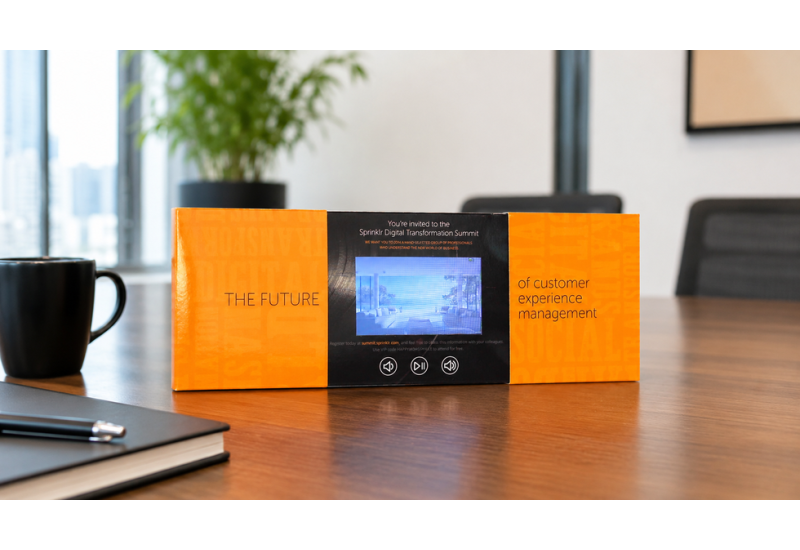
Seminar marketing for financial advisors is a mailbox problem before it's a room problem. Most of the work that determines whether seats fill happens weeks before the event: how the invitation lands, who it lands with, and whether it survives the trip from mailbox to kitchen counter. The seven ideas below cover the formats and sequences that give a seminar mailing a fair chance, plus the compliance considerations to build into the campaign before it goes to print.
We build corporate event marketing mail every day, and seminar invitations are one of the campaigns where the format choice does the most visible work. That's the frame for the ideas below.
Why Direct Mail Still Fills Seminar Seats
A financial seminar sells trust before it sells attendance. Print carries a tone email can't fake, and that tone matters when you ask a prospect to give an evening to a subject as personal as their money. Mail also works alongside digital rather than against it: the invitation earns the initial notice, and digital carries the reminders, RSVP tracking, and the pre-event nudges from there.
What Makes a Seminar Invitation Get Opened?
Size, weight, and shape all help an invitation stand out from the flat pieces sitting next to it in the mailbox. A standard "You're Invited" envelope reads as one more piece to sort through. A mailer that's thicker, oddly shaped, or interactive tends to earn a second look before the recipient decides whether to open it at all. Once it is opened, the date, location, value proposition, and RSVP path should land immediately, without the reader hunting for them.
7 Direct Mail Ideas for Seminar Marketing for Financial Advisors
The formats below all pull from the same principle: give the invitation a reason to be picked up. They work as much in combination as on their own.
1. Lead With a Video Brochure Invitation
An auto-play video brochure can start your pitch for attending before the prospect reads a single word. Our 4.3" and 7" video brochures begin playing the moment the piece opens, which suits a firm introducing a new advisor or a topic that benefits from being explained rather than read, like a market outlook or a tax-law change. The video also gives the prospect something to show a spouse or partner before they decide to RSVP together.
2. Choose a Dimensional Mailer That Demands a Second Look
A dimensional mailer, one that pops up, unfolds, or arrives in an unusual shape, is harder to overlook than a conventional flat piece. A pop-up seminar date or a mailer shaped like a ticket signals an event worth attending, not a form letter. One production note worth flagging early: rigidity, thickness, and unusual proportions can affect machinability, mailpiece classification, and postage, so check unusual formats with your printer or mail house before the design is locked.
3. Segment Your List by Household Value
Segmenting the mail list by estimated household assets, age, or existing relationship lets one seminar topic get pitched in several ways instead of sending one generic invitation to everyone. A retirement-income seminar reads differently to a prospect five years from retirement than to a client with a decade of runway, so the copy and even the format can flex by segment. A note on the data itself: for purchased prospect lists, asset or net-worth fields may be modelled or estimated rather than verified, depending on the data provider, so treat them as targeting signals rather than hard numbers. Route every version through whatever compliance-review process your firm requires before it goes to print, so build the segmentation into the piece before it goes to the printer.
4. Personalize Every Piece With Variable Data
Variable data printing puts the prospect's name, the advisor's name, and even a local branch address on every piece without hand-editing a single mailer. Personalization can improve relevance and engagement, especially for prospects who already recognize the advisor's name from a prior mailing. Cost depends on the print process, quantity, and how many variable fields or images each piece carries, so price the variable version against a static run before committing.
5. Give Every Invitation a Frictionless RSVP Path
Make the RSVP process as short as possible, and offer multiple paths. A QR code that opens straight to a mobile RSVP form suits prospects who register on their phone. A phone number covers prospects who'd rather call, and a prepaid reply card catches those who prefer paper. Different segments respond differently, so testing which channel your particular list uses is worth more than picking a default.
6. Send a Two-Touch Mail Sequence
A save-the-date piece, followed two to three weeks later by the formal invitation, gives the prospect a second chance to notice the event and respond. The save-the-date can be a simple postcard, and the formal invitation can include the video, the dimensional format, or fuller copy. This is a tactic rather than a proven lift, so worth trying against your usual single-mailing baseline to see how it performs on your list.
7. Send a Final Attendance Reminder
A short reminder piece mailed to prospects who never RSVP'd, or who RSVP'd early and haven't confirmed since, catches the ones who meant to respond and forgot. A postcard timed for about a week before the seminar, with the date, time, and RSVP path repeated, is often enough. This piece can run lighter and cheaper than the initial invitation, since its only job is the reminder. A separate campaign to actual no-shows lives after the event, which is worth its own effort: a recap email, a webinar replay, or a next-event invitation.
Keep Your Seminar Invitations Compliant
Compliance depends on how the advisor and firm are regulated, and the regimes work differently. For FINRA member broker-dealers, a seminar invitation distributed to more than 25 retail investors within a 30-calendar-day period generally qualifies as a retail communication under FINRA Rule 2210. Promotional retail communications generally require approval by an appropriately qualified registered principal before use, subject to the rule's exceptions. FINRA also treats scripts, slides, handouts, and other written or electronic materials used with a seminar as communications subject to the applicable provisions of Rule 2210, so the compliance review isn't only about the invitation.
For SEC-registered investment advisers, the SEC Marketing Rule kicks in once a piece qualifies as an advertisement. The rule covers what you can claim and what you must back it up with, along with related recordkeeping requirements under Rule 204-2. Advisers who also operate as broker-dealers may need to meet both sets of rules, and state-registered advisers should check what their jurisdiction adds.
Seminars aimed at retirees or near-retirees have historically drawn extra regulatory attention, so language around retirement outcomes, guarantees, and tax claims deserves careful review regardless of which regime applies. In every case, build the firm's required compliance review into the production schedule before committing to a print or mail date. A piece stuck in review can miss the RSVP window as reliably as a piece stuck at the printer.
When to Mail Your Seminar Invitations
A practical starting window is three to four weeks before the event for the formal invitation, and four to six weeks ahead for the save-the-date if you're running a two-touch sequence. That gives prospects enough notice to plan around a dinner or evening seminar without letting the date go stale. Adjust based on what you know about your list, postal transit time, venue deadlines, and competing events on your local calendar. Avoid holiday weeks when the calendar allows.
Seminar marketing for financial advisors depends on more than the invitation. Topic, list, venue, follow-up, and the presenter all matter, and the strongest invitation can't rescue a weak topic or a poorly targeted list. Direct mail does one thing well: it gets the right prospects to notice the event, in a format that earns a real read. If you're weighing a video brochure against a dimensional mailer for your next seminar, request a sample pack so you can put the formats side by side before committing to one.