

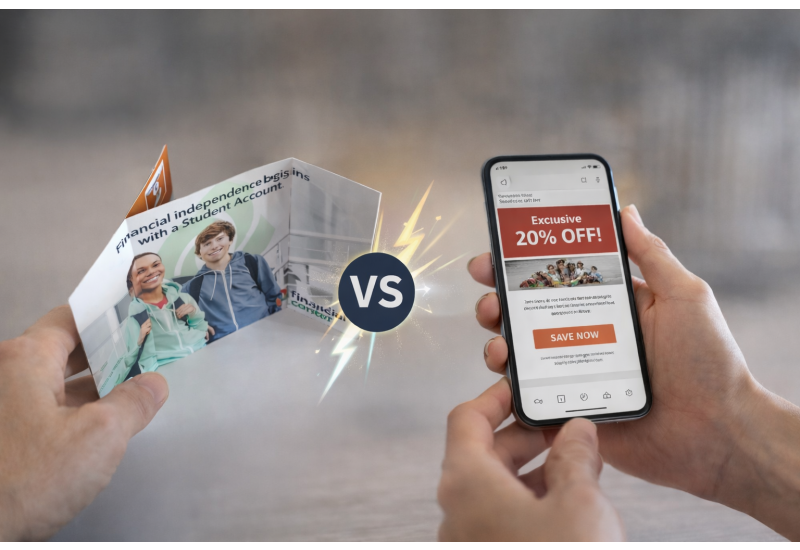
Choosing between direct mail vs email marketing is not always as simple as comparing cost or speed. Both channels can support lead generation, brand awareness, and customer retention, but they shape the customer journey in very different ways.
Email is fast, scalable, and easy to automate, while direct mail creates a physical, tactile experience that feels more personal and memorable. The better choice depends on your campaign objective, audience, timing, and offer. In many cases, the strongest results come from using both channels together.
For brands trying to stand out in crowded markets, creative execution matters just as much as channel selection, and reviewing examples of creative direct mail can help clarify what memorable execution looks like in practice. This guide compares visibility, cost, engagement, and long-term impact to help marketers make a more confident channel decision.
Direct Mail vs Email Marketing: What Makes Them Different?
When comparing marketing channels, the biggest difference is the audience experience. Email marketing arrives instantly, can be triggered automatically, and works well when speed matters. Direct mail marketing arrives physically, occupies real space, and creates a more tactile moment that increases attention and memorability.
That difference shapes how a message is perceived. An email competes in an inbox filled with newsletters, promotions, internal updates, and sales outreach. A mailed piece competes in a much smaller environment and creates a sense of weight, intention, and permanence. That’s one reason marketers exploring creative direct mail examples often discover that format alone changes how a brand message is received.
Think of it this way: a retailer launching a 48-hour flash sale will lean on email because it’s immediate and simple to segment. A brand introducing a premium service, an executive invitation, or a new product line benefits more from a piece of creative direct mail that is harder to ignore.
When Email Marketing Works Better
Email marketing is usually the better fit when a campaign needs speed, frequency, automation, or low distribution cost. It works especially well for nurture flows, event reminders, cart recovery, monthly promotions, onboarding, and repeat communication across long sales cycles.
A lean marketing team can launch an email campaign quickly, personalize copy based on behavior, and test subject lines, send times, and offers without major production changes. That flexibility makes email a practical choice for fast-moving campaign strategy decisions. It also supports tighter audience targeting, because marketers can segment by lifecycle stage, interest, geography, or prior engagement.
Still, email has limits. Email deliverability weakens performance before a message is ever seen, and open-rate data is less reliable than it once was. When every campaign lives in an already crowded inbox, visibility is never guaranteed.
When Direct Mail Works Better
Direct mail works better when a campaign needs more stopping power, stronger recall, or a more premium brand experience. It is especially effective for high-value outreach, hard-to-reach decision-makers, product launches, event invitations, and standout lead-generation campaigns.
A well-designed piece of personalized direct mail turns a marketing message into a physical brand interaction. That matters because people don’t just read the piece. They hold it, open it, rotate it, or keep it on a desk. Those small actions improve direct mail engagement and make the message easier to remember later.
This is where Red Paper Plane’s dimensional formats become especially relevant. From flat postcards to interactive mailers, pop-up mailers, and broader dimensional campaign strategies, Red Paper Plane's formats open up new possibilities. This guide on effectively using pop-up mailers is a good place to start. These formats support stronger brand recall marketing because the format itself helps deliver the message.
Cost vs Impact: Which Channel Delivers Better Value?
From a pure distribution standpoint, email is usually less expensive. It doesn’t require print production, postal prep, or postage, and it can be sent to large lists with relatively low incremental cost. That makes it a strong fit for broad nurture programs and high-frequency communication.
Direct mail comes with a higher upfront investment, but the value equation is different. When the goal is to earn deeper attention from a smaller, high-value audience, a more creative format justifies the spend. That’s especially true in direct mail for lead generation, account-based outreach, premium launches, and executive communications.
Why Direct Mail and Email Often Work Best Together
For many brands, the smartest answer to the direct mail vs email marketing isn’t either-or. It’s coordination. Multichannel marketing works because each channel reinforces the other at different moments in the customer journey.
A direct mail piece creates awareness, curiosity, and memorability. The email follows with timing, convenience, and a clickable path to respond. That combination often improves recognition and message retention because the audience encounters the same offer in multiple formats.
For example, a brand might send a dimensional teaser, then follow up with an email reminder that links to a landing page, an RSVP form, or a product demo. That sequence is especially effective in integrated marketing campaigns where the goal is to blend tactile attention with digital ease. Red Paper Plane highlights this thinking across its creative direct mail collection and industry-specific examples, such as technology direct mail, where the physical format helps brands stand apart from repetitive digital promotions.
How to Choose the Right Channel for Your Campaign
The best choice depends on four things: budget, timing, audience value, and offer type. If the campaign needs to move quickly, support frequent communication, or enable rapid testing, email is often the practical answer. If the campaign needs to create a memorable first impression, support premium positioning, or command stronger attention, direct mail is the better option.
Use email for ongoing communication, nurturing, reminder sequences, or fast promotional testing. Use direct mail when the objective is to stand out, reach a selective list, strengthen direct mail personalization, or support a message that deserves more physical presence. Use both when the campaign needs repeated visibility across multiple touchpoints.
The strongest channel decisions are grounded in audience behavior. A weekly update belongs in an email. A high-stakes introduction deserves one of the more memorable direct mail campaign ideas or interactive print advertising concepts Red Paper Plane has explored. The right strategy is the one that helps the audience notice, remember, and act.
Find the Right Fit for Your Next Campaign
The best channel depends on your goal, your audience, and the type of response your campaign needs to create. Email is a strong fit for speed, scale, and ongoing communication. Direct mail is the better choice when your message needs to feel more noticeable, memorable, and premium. And when the two channels are aligned, they reinforce one another across the customer journey.
If you’re looking for a more distinctive way to engage prospects, build stronger brand recall, and create an elevated experience, start by exploring Red Paper Plane’s creative direct mail examples, interactive mailers, and dimensional campaign formats.
Frequently Asked Questions
Is Direct Mail More Effective Than Email Marketing?
Direct mail is more effective when a campaign needs stronger attention, better memorability, or a premium feel. Email is often more effective for speed, scale, automation, and repeated communication.
What Is the Difference Between Direct Mail and Email Marketing?
Direct mail is a physical marketing piece sent through the postal system, while email marketing is a digital message delivered to an inbox. The difference isn’t just in the format, but in how the audience experiences the message.
When Should a Business Use Direct Mail Instead of Email?
A business should use direct mail when it needs to reach high-value prospects, improve brand recall, support a premium offer, or create a stronger physical impression than email can deliver.